

A driver clocks out of radio range twenty miles from base. The dispatcher keys the mic. Nothing comes back, no static, no reply, just silence where a check-in should be.
For decades, that dead zone was simply the cost of doing business with traditional two-way radios: useful until the moment someone drove, walked, or flew past their reach. Today, that limitation is optional.
How the two systems actually work
Traditional two-way radios communicate directly, radio to radio, or through a network of repeaters and towers that the business owns or leases. That infrastructure is what gives traditional radios their strength: near instant transmission with zero dependency on a cellular carrier. It is also what defines their constraint. Coverage stops exactly where the repeater signal stops.
Push-to-Talk over Cellular (PTToC) rides on existing 3G/4G cellular infrastructure, the same networks that already blanket most of the world. That single distinction shapes the differences of how the two systems operate.
Coverage and infrastructure cost
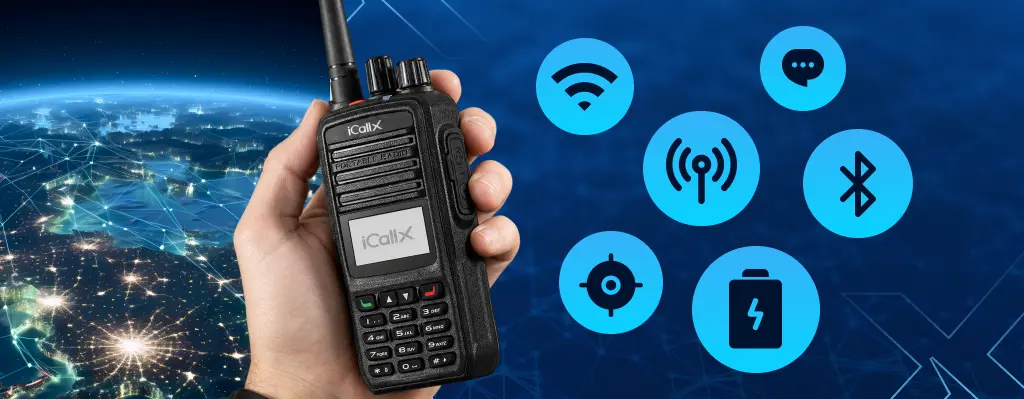
With traditional radios, extending coverage to one more building, route, or city means a site survey, new repeaters, and new towers; a real capital investment every time the business grows into new territory. With PTToC, coverage is embedded wherever a cellular signal reaches, worldwide. Radios such as the T 60 and T 65 run on 4G, 3G, and 2G networks and add built-in Wi-Fi, so teams working indoors can communicate without pulling from a data plan at all. There is no infrastructure project. Simply activate your device and you’re up and running.
GPS, dispatch, and visibility
Traditional systems generally were not built to answer the question “Where is my team right now?” A dispatcher hears from someone only when that person keys their mic. PTToC radios close that gap with built-in GPS, paired with the Web Dispatch Console for real-time visibility from a single browser screen. A dispatcher can see live location, set up geofencing alerts when someone enters or leaves a zone, supervise lone workers automatically, push files or job tickets directly to a device, and pull a full log of calls, alarms, and locations. The multiple call types (individual, group, all call, and broadcast), plus multimedia messaging with voice, text, pictures, and video, all run through the same console. It turns communication into a record, not just a conversation.
Built for the field
None of this matters if the hardware cannot survive a shift outdoors. The T 60 and T 65 carry an IP54 rating for dust and water resistance and operate reliably from -20°C to +50°C, with battery options up to 5200mAh for teams that need a full day, or several days, without a charge. Bluetooth support adds hands free headset use, and built-in NFC enables electronic patrol check-ins, a feature that matters for security and facilities teams doing scheduled rounds. The T60 includes an LED display for on-device status at a glance; the T65 keeps the same feature set in a display-free form for teams that want simplicity.
Scalability
Growing a traditional radio fleet usually means outgrowing the network before outgrowing the team, a plateau that forces a hardware decision the business did not choose the timing of. Growing a PTToC fleet works similarly to adding a cellular phone line: activate a device, assign it to the console, and done. Teams can scale from ten radios to two hundred without a single new tower.
So, which one fits your business?
A single site or campus with heavy, constant call volume and no cellular gaps still gets excellent value from a traditional system; there is no carrier dependency and no monthly data consideration. But a team spread across multiple properties, routes, cities, or countries; or a team that has already felt that “just out of range” silence, gains something traditional radios were never designed to offer: coverage that travels with the team and a dispatcher who always knows where everyone is.